

How To Install Helm On Ubuntu
This post explains steps to install helm 3 on kubernetes and installing captain charts for managing and deploying applications on the Kubernetes cluster.
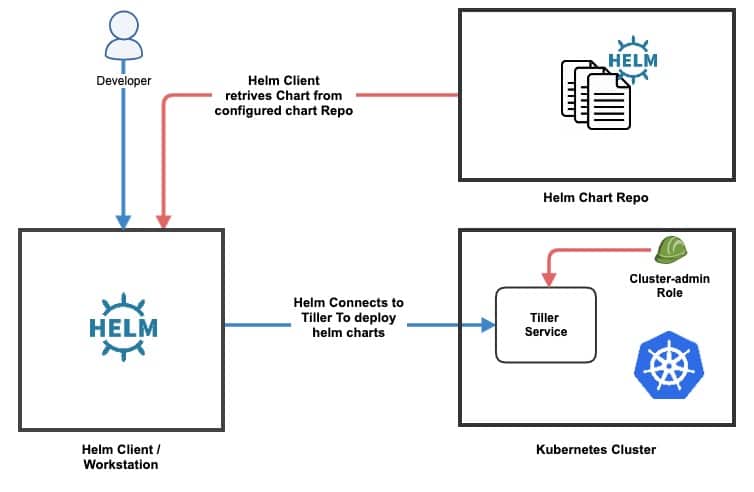
In helm 2 at that place is a helm component called tiller which will be deployed in the kubernetes kube-system namespace. Tiller components is removed in helm 3 versions.
Captain Prerequisites
You should have the post-obit before getting started with the helm setup.
- A running Kubernetes cluster.
- The Kubernetes cluster API endpoint should exist reachable from the machine you are running helm.
- Authenticate the cluster using kubectl and information technology should have cluster-admin permissions.
Captain 3 Architecture
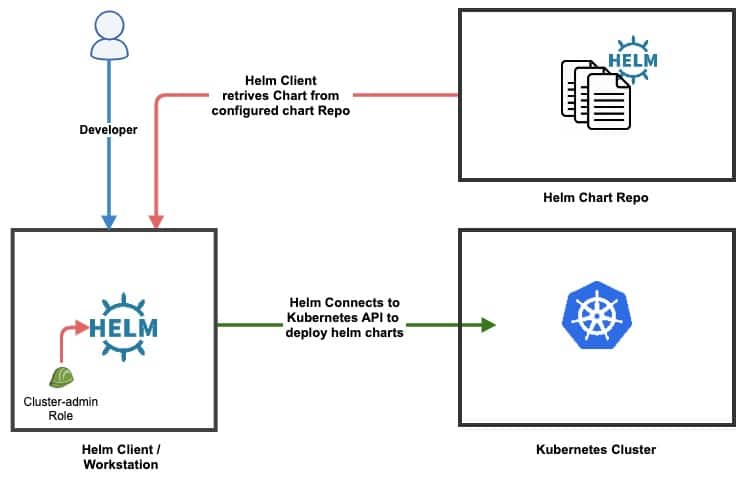
In captain iii there is no tiller component. Helm customer straight interacts with the kubernetes API for the helm chart deployment.
So from wherever you are running the captain command, yous should have kubectl configured with cluster-admin permissions for helm to execute the manifests in the chart.
Install Helm 3 – Using Script
I recommend this method if you are setting upwardly a exam environment in your local workstation or a server. For projection requirements, please follow binary installation in the adjacent section.
Note: The workstation you are running should have the kubectl context set up to the cluster you want to manage with Captain.
Step 1: Download the latest helm 3 installation script.
curl -fsSL -o get_helm.sh https://raw.githubusercontent.com/captain/helm/master/scripts/become-helm-3 Step two: Add execute permissions to the downloaded script.
chmod +x get_helm.sh Step 3: Execute the installation script. This script will automatically find the right binary for your organization.
./get_helm.sh Step 4: Validate helm installation by executing the helm command.
helm Install Helm 3 From Binary
This method is recommended for projection requirements where you can have specific version of helm installed across all the environments.
For example, if yous are using Jenkins for Helm deployments, ensure the Jenkins amanuensis where the helm control runs take kubectl configured with admin permissions.
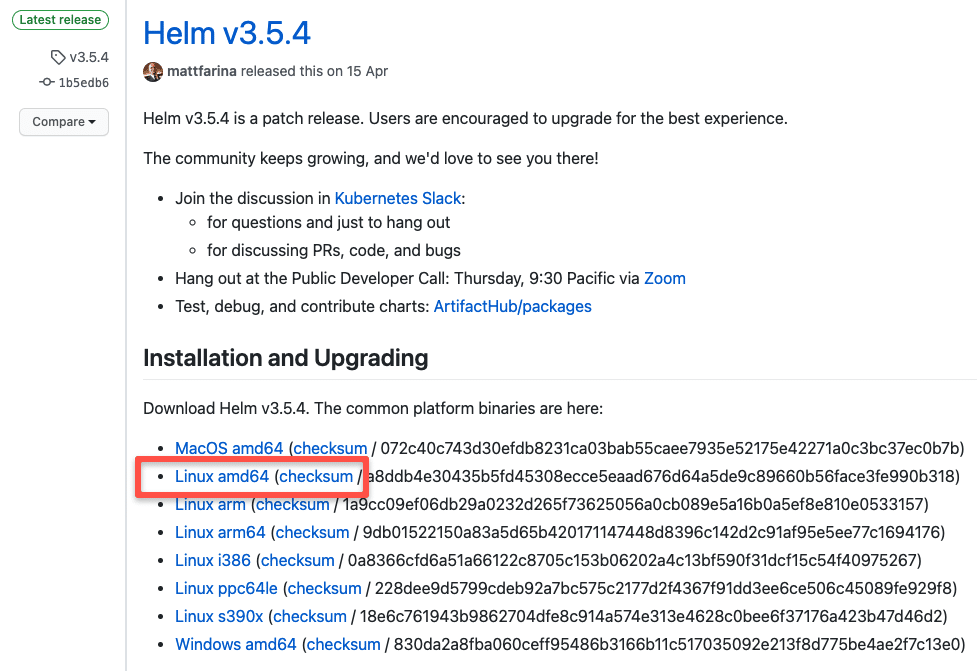
Stride 1: Head over to the Github helm release page and copy the Linux amd64 link for the required version.
Footstep 2: Download the binary using wget.
wget -O helm.tar.gz https://go.helm.sh/helm-v3.5.4-linux-amd64.tar.gz Step three: Untar the downloaded file.
tar -zxvf captain.tar.gz Step iv: Move the helm executable to the bin directory.
sudo mv linux-amd64/helm /usr/local/bin/helm Footstep 5: Validate by executing the captain command.
helm Add Stable Captain Repo
Helm repo contains the stable helm charts developed and maintained by the customs.
Now, add the public stable helm repo for installing the stable charts.
captain repo add together stable https://charts.helm.sh/stable You can search the available nautical chart using the search command. For instance, if you desire to prepare Jenkins on Kubernetes, y'all can search for Jenkins chart using the post-obit control.
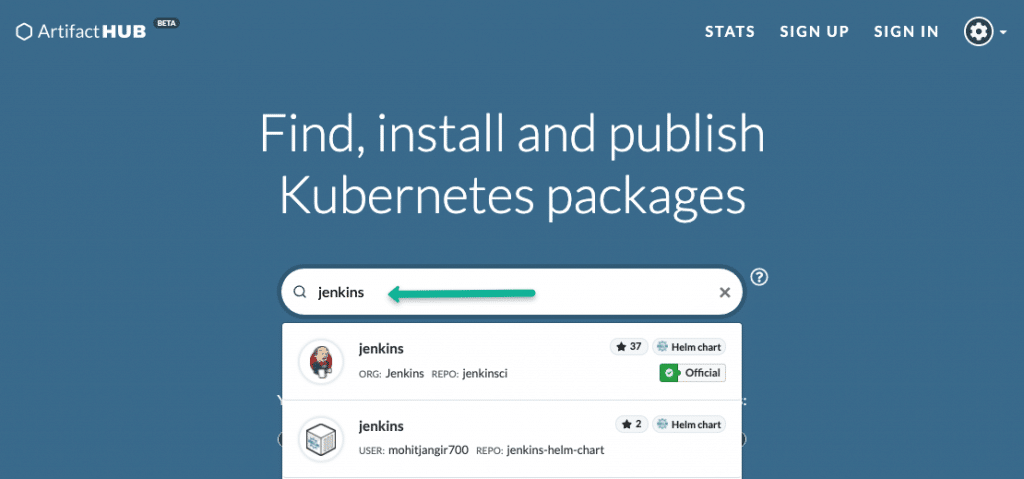
helm search repo jenkins Alternatively, you lot tin search stable customs charts via artifacthub.com. Here you can find many community-contributed helm charts.
Install & Validate Helm Chart
To validate the helm setup, lets setup nginx ingress controller using helm nautical chart available in artifacthub.
Pace 1: First add the nginx-ingress helm repo.
helm repo add ingress-nginx https://kubernetes.github.io/ingress-nginx Step 2: Update the chart repo.
helm repo update Step 3: Permit's install a stable Nginx chart and exam the setup. The ingress controller gets deployed in the default namespace.
helm install ingress-controller ingress-nginx/ingress-nginx Here ingress-controller is the custom release name. You tin can give the proper noun of your preference.
Stride 4: Now, check the status of the ingress helm deployment using the following command. It should show the status of the deployment.
helm ls Alternatively you can use kubectl command to check the ingress deployment in the default namespace.
kubectl get deployments Step iv: Now, to remove the deployment after validation, all you lot accept to exercise is uninstall the deployment using its release name.
helm uninstall ingress-controller Installing & Configuring Helm ii [Not Recomended]
Here is the helm two architecture.
This installation is on the client side. ie, a personal workstation, a Linux VM, etc. You lot can install the captain using a single liner. It volition automatically discover your Os blazon and installs helm on information technology.
Execute the following from your command line.
curl -L https://git.io/get_helm.sh | bash Create Tiller Service Business relationship With Cluster Admin Permissions
Tiller is the server component for helm. Tiller will be present in the kubernetes cluster and the helm client talks to it for deploying applications using helm charts.
Helm will be managing your cluster resources. So we need to add necessary permissions to the tiller components which resides in the cluster kube-system namespace.
Here is what we volition do,
- Create a service business relationship names tiller
- Create a ClusterRoleBinding with cluster-admin permissions to the tiller service account.
Nosotros will add both service account and clusterRoleBinding in ane yaml file.
Create a file named captain-rbac.yaml and re-create the following contents to the file.
apiVersion: v1 kind: ServiceAccount metadata: name: tiller namespace: kube-system --- apiVersion: rbac.authority.k8s.io/v1 kind: ClusterRoleBinding metadata: name: tiller roleRef: apiGroup: rbac.authorization.k8s.io kind: ClusterRole name: cluster-admin subjects: - kind: ServiceAccount proper name: tiller namespace: kube-system Lets create these resources using kubectl
kubectl apply -f helm-rbac.yam Initialize Helm: Deploy Tiller
Next pace is to initialize helm. When you initialize helm, a deployment named tiller-deploy will be deployed in the kube-system namespace.
Initialize helm using the following command.
captain init --service-business relationship=tiller --history-max 300 If y'all want a specific tiller version to be installed, you tin can specify the tiller image link in the init control using --tiller-image flag. You tin can find the all tiller docker images in public google GCR registry.
helm init --service-account=tiller --tiller-paradigm=gcr.io/kubernetes-helm/tiller:v2.14.i --history-max 300 If you dont mention "–service-account=tiller", you will get the following mistake.
Mistake: no available release name found You can check the tiller deployment in the kube-system namespace using kubectl.
kubectl get deployment tiller-deploy -north kube-system Deploy a Sample App Using Helm
Now lets deploy a sample nginx ingress using helm.
Execute the post-obit captain install control to deploy an nginx ingress in the kubernetes cluster. It volition download the nginx-ingress helm chart from the public github captain chart repo.
helm install stable/nginx-ingress --proper noun nginx-ingress You tin can cheque the install helm nautical chart using the following command.
captain ls You can delete the sample deployment using delete command. For case,
helm delete nginx-ingress Remove Captain (Tiller) From Kubernetes Cluster
If you want to remove the tiller installtion from the kubernetes cluster use the following command.
helm reset For some reason, if it throws error, force remove information technology using the following command.
helm reset --force Besides you lot tin utilise the kubectl command to remove it.
kubectl delete deployment tiller-deploy --namespace kube-system Decision
I this post we take seen how to install helm 3, install char repo and validate a sample helm deployment.
When you use helm for projection use cases, it is recommended y'all create your own helm charts with approved images from the security team.
If you apply customs helm charts in project environments, ensure you replace the community images with custom build images.
In the next weblog post, we will look in to nautical chart development and all-time practices of Captain

Source: https://devopscube.com/install-configure-helm-kubernetes/
Posted by: boydreand1979.blogspot.com
0 Response to "How To Install Helm On Ubuntu"
Post a Comment